Whether you’re facing challenges or looking for tailored solutions, our team is here to help. Get in touch with us today and take the next step towards securing your business’s future.
TL;DR: “Liability insurance” is not one policy. In South Africa a business usually needs to think about four kinds: public liability for injury or damage to other people and their property, product liability for harm caused by goods you make, import or sell, employers’ liability for claims connected to workers that fall outside COIDA, and professional indemnity for financial loss caused by your advice or services. Each responds to a different kind of claim, and a gap between them is where uninsured claims tend to land.
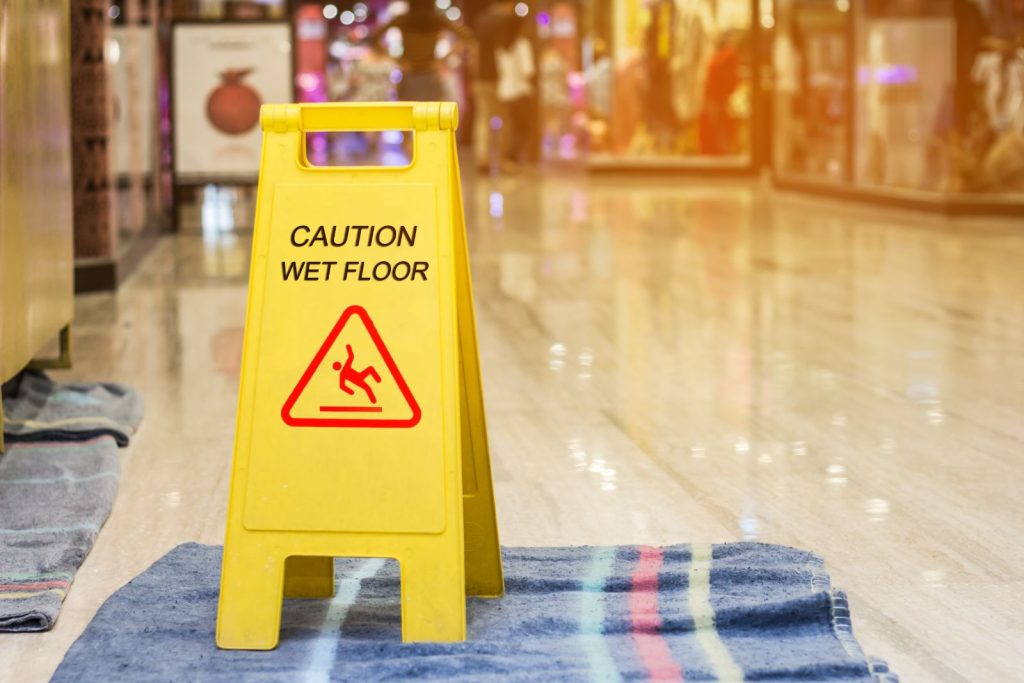
A customer slips on an oily patch next to a fruit display, is injured, and sues the supermarket. In Checkers Supermarket v Lindsay, the Supreme Court of Appeal upheld the store’s liability because it did not have an adequate and efficient cleaning system for finding and removing dangerous spills. The claim did not depend on anyone at the store doing something unusual. It depended on whether the business had taken reasonable steps.
That is the core of most liability claims, and it is why “do we have liability cover?” is the wrong question. The better question is which liabilities your business carries and whether each one is insured. This guide explains the four main types, what each covers, and where the gaps usually are. It is general information, not legal advice.
In this article
What liability insurance does
Liability insurance pays amounts your business becomes legally liable to pay to someone else, together with the legal costs of defending the claim, up to the limit of indemnity and subject to the policy terms. Unlike property insurance, which pays for your own loss, liability cover responds when someone else says you caused their loss.
In South African law, most liability claims are brought in delict. Broadly, the claimant must show that the business acted wrongfully and negligently and that this caused the harm. The courts ask whether a reasonable person in the business’s position would have foreseen the possibility of harm and taken reasonable steps to prevent it. Some liabilities, such as product liability under the Consumer Protection Act, do not require negligence at all.
Public liability
Public liability, sometimes called general or third-party liability, covers claims from members of the public, customers, visitors and other businesses for:
death, bodily injury or illness, and
loss of or damage to their property,
arising from your business activities or premises. Typical claims include slips and falls on premises, damage caused by your staff while working at a client’s site, and injuries at events you host.
Public liability matters for businesses that work on other people’s premises, not only those that receive visitors. In Chartaprops 16 v Silberman, a shopper slipped at Killarney Mall. The Supreme Court of Appeal held that the mall owner was not liable, because it had taken reasonable steps by appointing a competent cleaning contractor, and that the cleaning contractor was liable instead. The lesson for contractors is that the claim can land on them, so they need their own cover. Our guide to public liability insurance for builders and contractors covers construction sites in detail, and our event liability insurance page covers organisers.
Product liability and the Consumer Protection Act
Product liability covers claims for injury, illness or property damage caused by goods your business makes, imports, distributes or sells. In South Africa, the exposure is set largely by section 61 of the Consumer Protection Act 68 of 2008.
Liability without negligence. Section 61(1) makes the producer, importer, distributor or retailer of goods liable for harm caused wholly or partly by supplying unsafe goods, a product failure, defect or hazard, or inadequate instructions or warnings, “irrespective of whether the harm resulted from any negligence”.
Everyone in the supply chain. Where more than one person is liable, their liability is joint and several under section 61(3). The consumer can claim from the retailer even if the defect came from the manufacturer. A service provider who supplies or installs goods while doing a job is treated as a supplier of those goods.
What counts as harm. Section 61(5) includes death, injury or illness, loss of or physical damage to property, and economic loss that results from those.
Limited defences. Section 61(4) provides defences, for example where the defect did not exist when that person supplied the goods, or where it would be unreasonable to expect the distributor or retailer to have discovered it. Claims must be brought within three years of the relevant date.
Two points are often missed. First, importers and retailers carry the same strict liability as manufacturers, which is a real exposure for businesses selling imported goods whose overseas maker is out of reach. Second, product liability cover pays claims for harm caused by a product. It does not usually pay the cost of recalling faulty products, which needs separate product recall cover.
Employers’ liability and COIDA
Most workplace injuries are dealt with under the Compensation for Occupational Injuries and Diseases Act 130 of 1993 (COIDA). Section 35 prevents an employee from suing their employer for damages for an occupational injury or disease. The employee claims compensation from the Compensation Fund instead. Where the injury was caused by the employer’s negligence, section 56 allows the employee to apply for increased compensation.
So why does employers’ liability cover still matter? Because COIDA does not close every door:
Other employers’ workers. Section 36 allows an injured employee to claim COIDA compensation and also sue a third party who is not their employer. On a shared site, your business can be that third party when a sub-contractor’s employee is injured.
Injuries that do not arise from the employment. In Churchill v Premier, Mpumalanga [2021] ZASCA 16, an employee assaulted by protesters at work was found not to have been injured in a way that arose out of her employment. The section 35 bar did not apply, and the employer was held liable in delict.
Domestic workers. In Mahlangu v Minister of Labour [2020] ZACC 24, the Constitutional Court declared the exclusion of domestic workers from COIDA invalid, and the COIDA Amendment Act 10 of 2022 now includes them in the definition of employee.
Defence costs. Even a claim that fails has to be defended.
Employers’ liability is often added as an extension to a public liability policy rather than bought on its own. Check that yours is, and that the limit fits your workforce.
Professional indemnity
Professional indemnity (PI) covers claims for financial loss caused by negligent advice, design, errors or omissions in your professional services. It is the cover for engineers, architects, consultants, IT and technology firms, and anyone whose work is relied on by clients. Public liability does not normally cover pure financial loss from advice, which is why many businesses need both. Our guide to the difference between public liability and professional indemnity explains where the line falls.
PI is usually written on a claims-made basis. The policy responds to claims first made against you and notified to the insurer during the policy period, for work done on or after the retroactive date. If you let cover lapse, a claim made later about earlier work may not be covered, even though the work was done while you were insured. See our professional indemnity insurance page for more.
The four covers side by side
Public liability: covers injury to people and damage to their property caused by your activities or premises. It is triggered when the injury or damage happens, depending on the policy wording.
Product liability: covers injury, illness or property damage caused by goods you make, import or sell. Its main legal driver is section 61 of the Consumer Protection Act. It does not include recall costs unless separately insured.
Employers’ liability: covers claims connected to workers that fall outside COIDA, including claims by other employers’ staff.
Professional indemnity: covers financial loss caused by your advice or professional services. It is usually claims-made, so continuity of cover matters.
Directors and senior managers face a further, personal exposure for how the company is run, which is covered by directors and officers (D&O) insurance. Claims arising from data breaches are a cyber liability question, covered in our guide to third-party cyber liability.
Where the gaps usually are
A product seller with only public liability. Many public liability policies limit or exclude products, so a business that imports or retails goods needs to check that products cover is included and adequate.
A consultant with only public liability. Financial loss from advice falls outside public liability. That needs PI.
A contractor relying on the client’s cover. As Chartaprops shows, the claim can come to the contractor directly.
Work done in someone else’s premises. Damage to property in your care, custody or control is often excluded or sub-limited and may need an extension.
Cancelled PI. Stopping a claims-made policy can leave past work uninsured.
Choosing a limit of indemnity
The right limit depends on the worst realistic claim your business could face, and on what your contracts require. Landlords, main contractors, event venues and public sector clients often specify a minimum limit in the contract or tender, so check those documents before renewing. The limit should also allow for legal costs, which can be substantial even when a claim is defended successfully.
What does liability insurance cover in South Africa?
It pays amounts a business becomes legally liable to pay to others, plus defence costs, up to the policy limit. The main types are public liability, product liability, employers’ liability and professional indemnity, and each covers a different kind of claim.
Is public liability the same as product liability?
No. Public liability covers injury or damage caused by your activities or premises. Product liability covers harm caused by goods you make, import or sell. Some policies combine them, but products cover may be limited or excluded, so it needs checking.
Can a retailer be liable for a faulty product it did not make?
Yes. Under section 61 of the Consumer Protection Act, the producer, importer, distributor and retailer can all be liable for harm caused by unsafe or defective goods, without proof of negligence, and their liability is joint and several. Limited defences apply.
Do I need employers’ liability cover if I am registered for COIDA?
Usually, yes. COIDA stops your own employees suing you for most workplace injuries, but it does not stop claims from other employers’ workers on a shared site, or claims that fall outside COIDA. Employers’ liability cover also pays defence costs.
Does public liability insurance cover bad advice?
Generally not. Financial loss caused by advice or professional services is covered by professional indemnity insurance, which is usually written on a claims-made basis.
Hello 👋 How can we assist you with your insurance needs today?
By opting in, you agree to receive messages from Berkley Risk regarding our specialised insurance services. We respect your privacy and will use your contact information solely for communication related to your inquiries and our services. You can opt out at any time. For more details, please review our Privacy Policy.